
Published: February 2026
Author: Amergin Consulting Ltd.
Target Audience: Business Owners, Small Business Seeking Financial Stability, Entrepreneurs, Start-Ups
Book a meeting: https://calendly.com/amergin-group_free/30min-finance-consultation
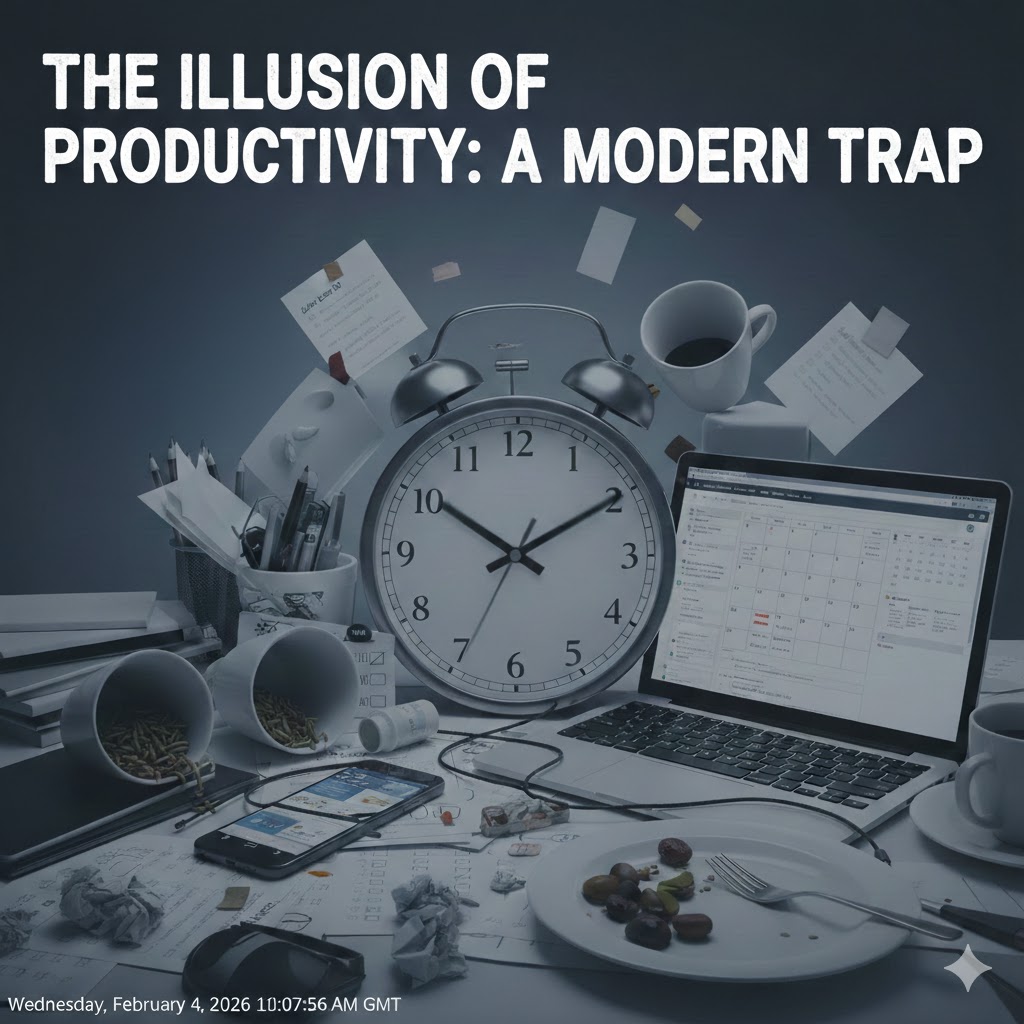
Being busy is usually treated as evidence that a business is healthy.
Calendars are full. Teams are stretched. Emails pile up. The founder is constantly involved. From the outside, it looks like momentum. Inside the business, it often feels like pressure, fatigue, and a constant sense of being behind.
In many SMEs and growing businesses, busyness becomes normalised. It is worn as a badge of honour. If everyone is busy, the assumption is that the business must be doing something right.
But busyness is not the same as progress. In fact, sustained busyness is often a warning sign that something deeper is wrong.
Amergin’s work frequently begins at this point. Founders come in saying they are flat out, the team is working hard, and revenue is coming in yet stress is high, margins are under pressure, and the business feels harder to run than it should. Amergin positions itself as an integrated partner for Irish SMEs and growing businesses, helping owners manage accounting, payroll and finance with confidence while also building strategic capacity in marketing, operations and planning. That integration matters because busyness is rarely caused by one issue. It is the visible symptom of deeper structural problems.
This article explores why being busy is often a warning sign, what persistent busyness is really telling you about your business, and how strong foundations replace busyness with momentum.
Busyness is activity, not effectiveness
Busyness measures motion, not direction.
A business can be extremely busy while making very little meaningful progress. Work can be constant while outcomes remain flat. Teams can be exhausted while results stagnate.
This happens when effort is disconnected from priorities. Without clarity, everything feels important. Without structure, work competes instead of compounding. Without visibility, people respond to what is loud rather than what matters.
The result is constant activity with limited strategic impact.
In healthy businesses, effort leads to progress. In unhealthy ones, effort leads to exhaustion.
Persistent busyness usually signals unclear priorities
One of the clearest causes of chronic busyness is unclear prioritisation.
When priorities are not explicit, people default to urgency. The newest request wins. The loudest customer wins. The biggest problem wins. Planning collapses under interruption.
Teams switch tasks frequently, rarely finishing work cleanly. Founders intervene constantly to unblock decisions. Everyone stays alert because priorities might change at any moment.
This creates a feeling of being permanently busy without ever feeling ahead.
Strong businesses protect focus. Weakly founded businesses consume it.
Amergin’s sprint-based execution models are designed specifically to counter this dynamic by narrowing priorities and sequencing work intentionally. When priorities are clear, busyness drops even as output improves.
Busyness often hides rework and inefficiency
Another reason busyness is a warning sign is that it often masks rework. Teams redo work because expectations were unclear. Deliverables change because scope was vague. Decisions are revisited because they were never fully made. Problems resurface because root causes were never addressed.
From the outside, the team looks busy. From the inside, much of that effort is compensating for missing clarity. Hidden rework is one of the most expensive forms of inefficiency because it consumes time without creating value.
Amergin often finds that once scope, ownership, and standards are clarified, workloads drop noticeably even though output stays the same or improves.
Being busy can signal weak margins
In many businesses, busyness increases as margins decrease.
Low-margin work requires more volume to generate the same financial return. Teams must deliver more, support more customers, and handle more complexity just to stand still. Revenue grows. Effort explodes. Cash remains tight. Stress rises.
This is why some of the busiest businesses are also the most financially fragile.
Amergin’s margin-focused approach highlights that not all work is equal. When margins are weak, busyness increases by design. When margins are strong, the business can achieve more with less effort.
Founder busyness is a major red flag
Founder busyness deserves special attention.
When founders are constantly involved in day-to-day decisions, customer issues, approvals, and problem-solving, it often signals missing structure rather than strong leadership.
Founders become busy because they are filling gaps. Gaps in ownership. Gaps in systems. Gaps in clarity. Over time, this reinforces founder dependence. The business cannot operate smoothly without constant intervention. Scaling becomes harder. Stress becomes chronic.
Amergin’s advisory work frequently focuses on reducing founder busyness by designing systems that carry responsibility instead of people.
Busyness increases stress without increasing safety
Many founders stay busy because they believe it keeps things under control.
Ironically, constant busyness often reduces safety. When everyone is stretched, mistakes increase. When decisions are rushed, quality drops. When people are tired, issues are missed. When no one has space to think, problems repeat.
Busyness creates the illusion of control while increasing underlying risk.
Strong foundations reduce busyness precisely because they increase reliability. When systems work, people do not need to hover.
Compliance and financial risk grow under chronic busyness
Busyness is particularly dangerous when it comes to finance and compliance.
When teams are stretched, record-keeping slips. Deadlines are met at the last minute. Errors are more likely. Issues are patched rather than resolved.
In Ireland, Revenue is clear that responsibility for record keeping remains with the business, even when accountants or agents are involved, and that records must support tax returns and clearly show the accounting process. Company law similarly requires adequate accounting records that correctly record and explain transactions.
Chronic busyness increases the likelihood of compliance risk because it leaves no margin for error.
Amergin’s integrated approach helps businesses replace busyness with predictable processes that reduce risk quietly.
Real-life example: when busyness masked the real problem
A growing Irish SME approached Amergin describing a familiar situation. The business was extremely busy. The team worked long hours. The founder was involved in everything. Revenue targets were being hit, yet stress levels were high and cash always felt tight.
From the outside, it looked like success under pressure.
Amergin began by examining how work flowed through the business. It became clear that much of the busyness came from unclear scope, frequent customer exceptions, duplicated effort between teams, and constant founder intervention to resolve issues that should not have existed in the first place. Financial reporting lagged behind reality, so decisions were made reactively.
By tightening scope, clarifying ownership, improving margin discipline, and introducing clearer financial and operational rhythms, the workload reduced significantly. The team became less busy, not because demand dropped, but because effort stopped leaking. Stress fell, margins improved, and the founder regained time to focus on direction rather than firefighting.
The problem had never been laziness or lack of effort. It was the system.
Healthy businesses are not quiet, but they are focused
It is important to distinguish between healthy intensity and harmful busyness. Strong businesses can be fast-moving, demanding, and ambitious. The difference is that their effort is focused.
Work is intentional. Priorities are protected. Progress is visible. Recovery is possible. Unhealthy busyness feels frantic, scattered, and endless. There is motion without momentum.
The goal is not to eliminate effort. It is to eliminate waste.
How Amergin helps businesses move beyond busyness
Amergin does not treat busyness as a productivity issue. It treats it as a design issue.
On the financial side, Amergin builds clarity through reliable bookkeeping, meaningful reporting, KPIs, and cashflow projections so decisions are grounded in reality. On the growth side, Amergin clarifies ICP, positioning, and pricing so effort is directed at the right customers. On the operational side, Amergin helps define ownership, scope, and execution rhythms so work flows predictably. On the advisory side, Amergin helps founders step back and redesign systems that reduce unnecessary effort.
The result is not less ambition. It is more leverage.
The real cost of being busy
The true cost of chronic busyness is not tiredness. It is missed opportunity. It is eroded margin. It is delayed improvement. It is increased risk. It is burnout. It is a business that works its people harder instead of working better.
Busyness often feels productive because it is visible. Progress is quieter.
The takeaway
Being busy is not a badge of honour.
In many cases, it is a warning sign that the business is compensating for missing clarity, weak foundations, or poor alignment. The healthiest businesses are not those that work the hardest. They are those that design systems where effort compounds instead of leaks.
When busyness drops and results improve, you are no longer just working — you are building something that lasts.
About Amergin Consulting Ltd.
Amergin Consulting Ltd. is a Dublin-based chartered accountancy and business advisory firm serving Ireland’s SMEs and growth companies across construction, technology, professional services, and renewable energy.
We specialise in Accounting, Payroll, Taxation, and CFO Services that help businesses build stronger foundations for profit and compliance.
Need help running a year-end tax review or planning your 2026 changes?
Amergin Consulting’s finance and tax team can help you identify deductions, forecast cash flow, and ensure full compliance before the year closes.
Book your 30-minute consultation: https://calendly.com/amergin-group_free/30min-finance-consultation
Disclaimer
This article is for general informational purposes only and does not constitute financial or tax advice. While every effort has been made to ensure accuracy, legislation may change upon enactment of the Finance Act 2025.
Public should seek professional advice tailored to their specific circumstances before acting on any points discussed.
Sources and resources
Amergin Consulting – Integrated Financial & Marketing Consulting for Irish SMEs and Growing Businesses.
https://amergin.ie
Amergin Accounting Services – Bookkeeping, KPIs and Cashflow Planning.
https://amergin.ie/accounting
Amergin Business Advisory Services.
https://amergin.ie/business-advisory
Revenue Commissioners – Keeping Records.
Guidance on record-keeping responsibility and retention requirements.
https://www.revenue.ie
Companies Act 2014 (Ireland), Section 282.
https://www.irishstatutebook.ie
Harvard Business Review – Stop Mistaking Busyness for Productivity.
https://hbr.org
MIT Sloan Management Review – Organisational Overload and Performance.
https://sloanreview.mit.edu
ScienceDirect – Workload, Stress, and Performance.
https://www.sciencedirect.com