
Published: February 2026
Author: Amergin Consulting Ltd.
Target Audience: Business Owners, Small Business Seeking Financial Stability, Entrepreneurs, Start-Ups
Book a meeting: https://calendly.com/amergin-group_free/30min-finance-consultation
Financial discipline is often misunderstood.
In many SMEs, it is associated with restriction, cost-cutting, control, or caution. It is viewed as something that slows growth or limits flexibility. In some cases, it is treated as an administrative obligation rather than a leadership responsibility.
However, financial discipline is not primarily about protecting numbers.
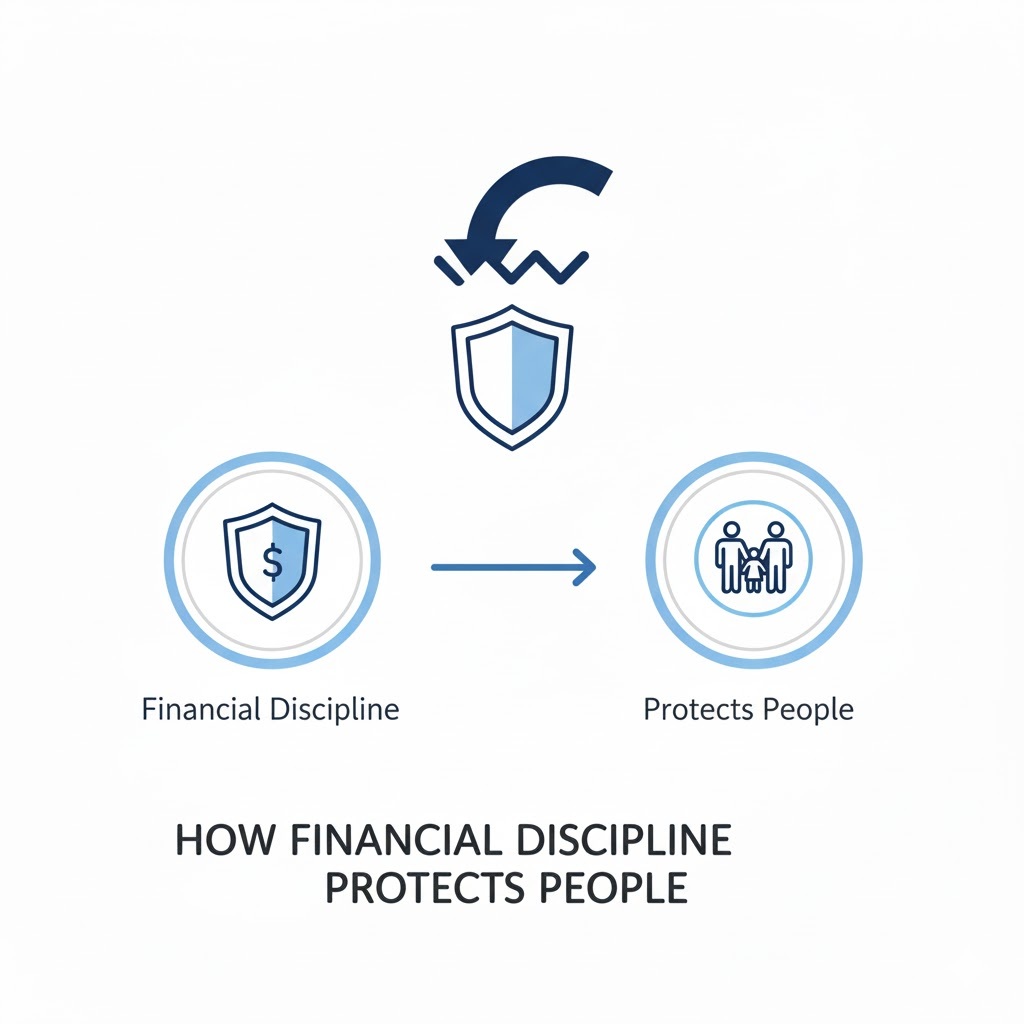
It is about protecting people.
It protects employees from instability.
It protects founders from burnout.
It protects customers from inconsistent delivery.
It protects families from financial shocks.
It protects the long-term viability of the business itself.
When financial discipline is weak, pressure lands on individuals. When financial discipline is strong, the system absorbs pressure instead of people carrying it.
Amergin works with Irish SMEs and growing businesses at the point where financial pressure begins affecting leadership confidence and team wellbeing. Amergin positions itself as an integrated partner across accounting, payroll, finance, marketing, operations, and advisory. That integration matters because financial discipline is not about spreadsheets alone. It shapes hiring, pricing, growth decisions, stress levels, and ultimately culture.
This article explores how financial discipline functions as a protective structure, why its absence increases human strain, and how simple financial models create stability that benefits everyone in the organisation.
Financial instability always shows up in people first
When financial discipline is weak, the first signs rarely appear in formal reports.
They appear in behaviour.
Payroll feels tense before it becomes late. Hiring decisions are delayed because confidence is low. Founders become more reactive. Managers hesitate to commit to plans. Staff sense uncertainty even when revenue looks strong.
Financial instability increases emotional load across the organisation. Leaders become cautious or defensive. Teams feel the pressure of unspoken concerns. Decisions are postponed. Investment in training or systems is delayed.
The business may continue functioning, but the psychological cost rises.
Financial discipline reduces this invisible burden. It creates predictability. It allows people to focus on performance rather than survival.
Protecting employees through cash clarity
Employees rely on one fundamental assumption: that the business is stable enough to meet its commitments.
When payroll cycles feel unpredictable or hiring appears reactive, trust erodes quietly. Even if wages are always paid, uncertainty in leadership tone can affect morale.
Amergin frequently emphasises that many businesses fail due to poor cashflow rather than lack of profitability. Cash clarity, therefore, is not simply a finance tool. It is a trust mechanism.
A rolling 12-month cashflow forecast allows leadership to see pressure points in advance. Payroll commitments are planned. VAT and tax liabilities are reserved. Growth investments are sequenced intentionally.
When financial commitments are structured, employees experience stability. They do not feel the emotional ripple of leadership anxiety.
Financial discipline protects the people who depend on predictable income.
Protecting founders from chronic stress
Founders often carry the financial uncertainty of the business alone.
They absorb the risk. They think about worst-case scenarios quietly. They monitor cash in their heads. They hesitate to share concerns because they do not want to create alarm.
Over time, this mental load accumulates.
When financial discipline is weak, founders compensate with vigilance. They stay involved in every decision. They approve every expense. They monitor every invoice. They feel personally responsible for gaps in clarity.
This level of constant alertness leads to burnout.
Simple financial discipline reduces this burden. Contribution models clarify margin. Break-even calculations structure hiring. Cashflow forecasts eliminate guesswork. VAT forecasting removes deadline anxiety.
When the system provides visibility, the founder no longer needs to hold uncertainty alone.
Financial discipline protects the mental health of leadership.
Protecting customers through operational stability
Customers may never see a financial report, but they feel financial instability indirectly.
When cash is tight, service quality can slip. When hiring is reactive, delivery consistency suffers. When leadership is stressed, decision-making becomes rushed.
Financial discipline creates operational reliability. When pricing aligns with margin targets, capacity is not overstretched. When hiring is based on contribution rather than urgency, teams are balanced. When investment is planned rather than postponed, service improves.
Customers experience the result as professionalism and consistency.
Financial clarity supports quality.
Protecting long-term opportunity
One of the hidden costs of weak financial discipline is lost optionality.
When cash is uncertain, investment feels risky. Hiring feels dangerous. Expansion feels overwhelming. Even promising opportunities are declined because leadership lacks confidence in sustainability.
Financial discipline restores optionality. With clear visibility into margin and cash, businesses can invest deliberately. They can absorb temporary setbacks. They can pursue growth without destabilising operations.
The protection extends beyond today’s stability. It safeguards future possibility.
Compliance discipline protects the organisation quietly
In Ireland, businesses carry statutory responsibilities for accurate record-keeping and timely tax compliance. Revenue requires proper books and records that clearly reflect transactions. Company law similarly requires adequate accounting documentation.
Weak financial discipline increases compliance risk. Informal processes, inconsistent reporting, and reactive tax management create exposure.
Compliance failures rarely hurt numbers first. They damage people. They create stress, reputational risk, and legal consequences.
Financial discipline formalises these processes. Reliable bookkeeping, VAT forecasting, payroll accuracy, and structured reporting protect the organisation from unnecessary risk.
This is not bureaucracy. It is structural protection.
Real-life example: stability changes culture
An Irish SME experienced steady revenue growth but persistent internal tension. The founder worried about cash timing. Hiring decisions were delayed. Staff sensed caution, even when business appeared strong.
Amergin introduced three core disciplines: a rolling cashflow forecast, contribution analysis by client, and structured VAT planning integrated into monthly reporting.
Within months, leadership behaviour shifted. Hiring was sequenced confidently. Pricing decisions became firmer. Payroll was no longer a point of anxiety. Communication with staff improved because uncertainty had reduced.
Revenue had not changed dramatically. What changed was stability.
The team began operating with greater calm. Leadership felt steadier. The business became less reactive.
Financial discipline had protected the people inside it.
Simple models create sustainable discipline
Financial discipline does not require complexity.
It requires consistency.
A contribution model clarifies margin per client or service.
A break-even model structures hiring decisions.
A rolling cashflow forecast maps timing risk.
VAT forecasting separates operational cash from statutory obligations.
These simple models, reviewed regularly, create discipline without overwhelming leadership.
Simplicity ensures adoption. Adoption creates stability.
How Amergin embeds financial discipline
Amergin integrates financial discipline across multiple dimensions.
Accurate bookkeeping ensures reliable data. Management reporting translates data into insight. Advisory support aligns hiring, pricing, and growth decisions with financial clarity. Marketing strategy ensures demand matches margin goals. Compliance systems protect statutory obligations.
This integrated approach ensures discipline is not an isolated accounting exercise. It becomes part of how the business operates daily.
Financial discipline is woven into leadership behaviour rather than imposed externally.
The deeper truth: discipline is care
Financial discipline is often framed as control.
In reality, it is care.
It is care for employees who depend on stability.
It is care for founders who carry responsibility.
It is care for customers who expect reliability.
It is care for the long-term sustainability of the business.
When discipline is absent, pressure falls on people. When discipline is present, pressure is absorbed by structure.
Strong businesses do not rely on effort alone. They design systems that protect the humans inside them.
About Amergin Consulting Ltd.
Amergin Consulting Ltd. is a Dublin-based chartered accountancy and business advisory firm serving Ireland’s SMEs and growth companies across construction, technology, professional services, and renewable energy.
We specialise in Accounting, Payroll, Taxation, and CFO Services that help businesses build stronger foundations for profit and compliance.
Need help running a year-end tax review or planning your 2026 changes?
Amergin Consulting’s finance and tax team can help you identify deductions, forecast cash flow, and ensure full compliance before the year closes.
Book your 30-minute consultation: https://calendly.com/amergin-group_free/30min-finance-consultation
Disclaimer
This article is for general informational purposes only and does not constitute financial or tax advice. While every effort has been made to ensure accuracy, legislation may change upon enactment of the Finance Act 2025.
Public should seek professional advice tailored to their specific circumstances before acting on any points discussed.
The takeaway
Financial discipline is not restrictive.
It is protective.
It transforms uncertainty into clarity. It converts stress into stability. It replaces guesswork with foresight. It ensures that growth strengthens rather than strains the organisation.
Numbers matter, but not because they look impressive.
They matter because they protect people.
Sources and Resources
Amergin Consulting – Integrated Financial & Marketing Consulting for Irish SMEs and Growing Businesses
https://amergin.ie
Amergin Accounting Services – Bookkeeping, KPIs and Cashflow Planning
https://amergin.ie/accounting
Revenue Commissioners – VAT, PAYE and Record-Keeping Obligations
https://www.revenue.ie
Revenue Tax and Duty Manual Part 38-03-17 – Books and Records
https://www.revenue.ie
Companies Act 2014 (Ireland), Section 282
https://www.irishstatutebook.ie
Harvard Business Review – Financial Transparency and Organisational Trust
https://hbr.org
MIT Sloan Management Review – Financial Discipline and Organisational Resilience
https://sloanreview.mit.edu